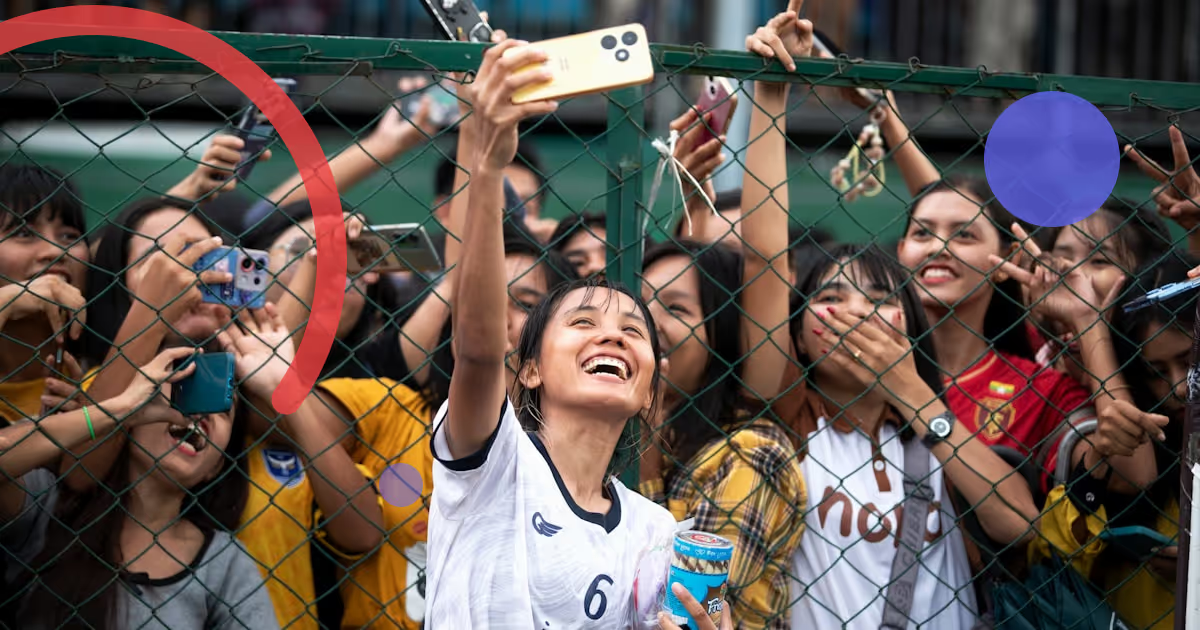

In about three weeks, the FIFA World Cup kicks off. 64 games. 32 teams. Billions of fans, including many inside your company.
Most organizations will put up a screen in the break room and call it a day. The smart ones will turn it into a culture moment.
What Happens When a Global Event Meets a Global Workforce
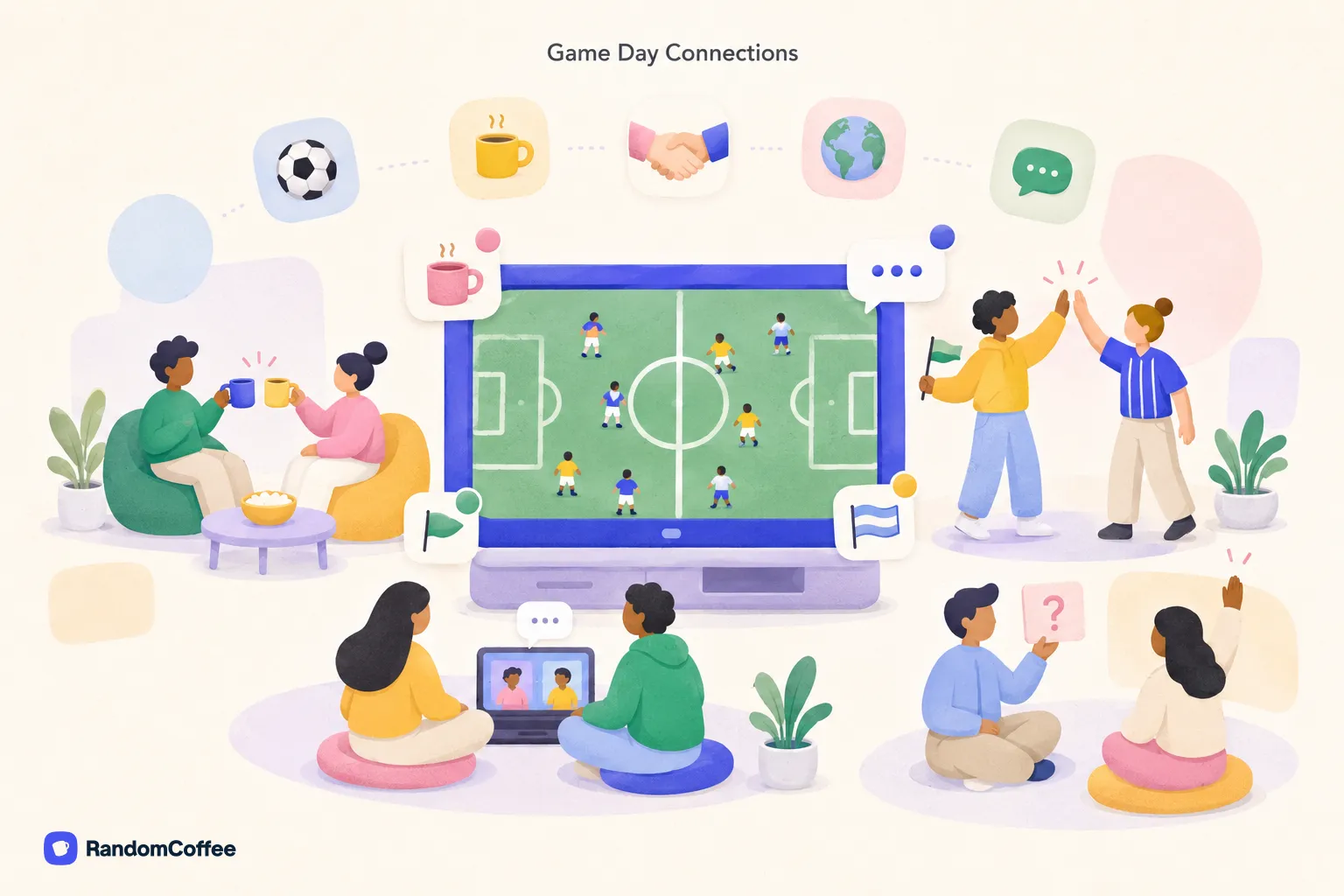
The World Cup is one of the rare moments in the year where a junior engineer in Brazil, a finance manager in South Korea, and a sales lead in Germany are all talking about the same thing at the same time.
That kind of shared context is incredibly rare. And for People teams, it is incredibly valuable.
Belonging does not happen by accident. It happens when employees have a reason to reach out across teams, functions, and geographies. The World Cup hands that reason to you on a plate.
Research from Gallup consistently shows that employees with a close friend at work are 7x more likely to be engaged. But building those friendships requires shared moments, especially across silos and time zones. Global events like the World Cup create a natural, low-pressure bridge that no org chart can replicate.
Four Ways to Turn the World Cup Into a Connection Ritual
1. Team Cohorts: Group People by Passion, Not Function
Send a simple form to your employees: "Which team are you supporting?"
Then use those responses to group people who support the same team, or rival ones. Suddenly, a designer in Lyon and a product manager in Buenos Aires have a reason to connect that no organizational restructuring could have created.
This works because identity-based connections are powerful. When two people discover they are both Argentina fans, that shared identity creates an immediate sense of in-group belonging. It is the same mechanism that makes ERGs effective, applied to something universally accessible.
How to do it:
- Send a one-question survey: "Which team are you supporting this World Cup?"
- Group respondents into cohorts (same team, rival teams, or mixed pools)
- Use RandomCoffee to match people within those cohorts for coffee chats during the tournament
- Create a dedicated Slack or Teams channel per cohort for banter and predictions
2. Watch Party Matching: Turn 90 Minutes Into Real Belonging
Find out who is planning to watch key games and where. Match people in the same city or office who want to watch together.
A 90-minute game becomes a moment of real belonging, one that builds social capital across silos. A product designer and a finance analyst who watch a semifinal together will collaborate differently on Monday morning. That is not a guess; it is how relational trust works.
How to do it:
- Survey which key matches people plan to watch (semi-finals, their team's group stage games)
- Collect city/office location alongside preferences
- Match people in the same area who want to watch together
- For remote teams, set up virtual watch parties with shared video links
3. World Cup Trivia Groups: Make Knowledge a Connector
Match employees by football knowledge and let them challenge each other. Light, fun, and a brilliant way to spark cross-departmental conversations that would not otherwise happen.
Trivia works because it creates low-stakes competition: enough to generate energy and conversation, not enough to create stress. It is the perfect engagement sweet spot for employees who might not normally join workplace social programs.
How to do it:
- Create a short trivia quiz (10 questions, mix of easy and obscure)
- Group people by score range so matchups feel balanced
- Run weekly trivia rounds throughout the tournament via Slack or email
- Feature a leaderboard in your internal newsletter
4. "Dark Horse" Connections: Bond Over the Unexpected
Ask everyone which surprise team they think will go far. Match people who picked the same underdog.
It sounds small. But micro-rituals like this are exactly how strong cultures are built, one unexpected connection at a time.
When two strangers in your company both believe Canada will make the quarterfinals, they already have a story. That story becomes a Slack exchange. That exchange becomes a coffee chat. That coffee chat becomes a relationship that outlasts the tournament by years.
How to do it:
- Ask: "Which team nobody expects will surprise everyone this World Cup?"
- Match people who picked the same dark horse for a quick intro call
- Follow up after the group stage: were they right? What happened?
- Use the results as a fun internal content piece
Why This Matters Beyond the Tournament
These are not gimmicks. They are what we call intelligent collisions: moments where people who would not normally interact find a genuine reason to.
Every time that happens, something shifts. A silo cracks. A new relationship forms. An idea crosses a boundary it would not have crossed otherwise.
The World Cup lasts a month. The psychological safety, the cross-functional trust, and the sense of community it can seed? Those last much longer.
The research backs this up. A 2025 study from BetterUp found that employees who participate in even one structured social interaction per month are 34% more likely to report high belonging and 2.4x less likely to leave within a year. The World Cup gives you four weeks of natural conversation starters. The question is whether you use them.
A Playbook for People Teams
If you want to make this happen before the tournament starts on June 11th, here is a simple timeline:
For HR and People leaders thinking about employee engagement, culture activation, and belonging at scale, this is low-effort, high-impact.
The Bottom Line
The World Cup is not just a sporting event. It is a connection accelerator hiding in plain sight.
Every four years, billions of people around the world share the same stories, the same emotions, and the same debates. Your employees are among them. The only question is whether you channel that energy into stronger workplace connections, or let it stay in the group chat.
The smart move is to start now. Three weeks is plenty of time to turn a global spectacle into a lasting culture ritual.
Ready to run your World Cup activation? Book a quick call and get your templates before June 11th →
Frequently Asked Questions
Does this work for companies where not everyone follows football?
Yes. The beauty of the World Cup is that it transcends football fandom. Many employees will have cultural connections to competing countries, even if they don't follow the sport closely. Dark horse picks and trivia work especially well for non-fans because they lower the knowledge barrier.
How do we make this inclusive for employees in regions where football is less popular?
Frame it as a cultural connection event, not a sports event. Focus on the countries, the stories, and the shared experience. You can also pair the World Cup program with a "suggest the next global event" poll to ensure future activations reflect broader interests.
What if we have a small team? Is this still worth doing?
Absolutely. Small teams benefit even more from structured connection moments because informal interactions are harder to sustain at scale. Even matching 10 people into dark horse pairs creates conversations that would not have happened otherwise.
How do we measure the impact of a World Cup activation?
Track three things: participation rate (what percentage of employees opted in), new connections formed (how many cross-team pairs were created), and follow-up engagement (did those pairs continue interacting after the tournament). If you use RandomCoffee, these metrics are captured automatically.