Skill-based pairing
“We have skill gaps scattered across dozens of teams, how do we close them without a training catalog for each one.”
What we hear from HR teams
Close the skill gaps scattered across your teams without building a training catalog for each one. RandomCoffee matches who has a skill with who needs it, at scale.
Trusted by 1,250+ organizations in 30+ countries:























What is skill-based pairing?
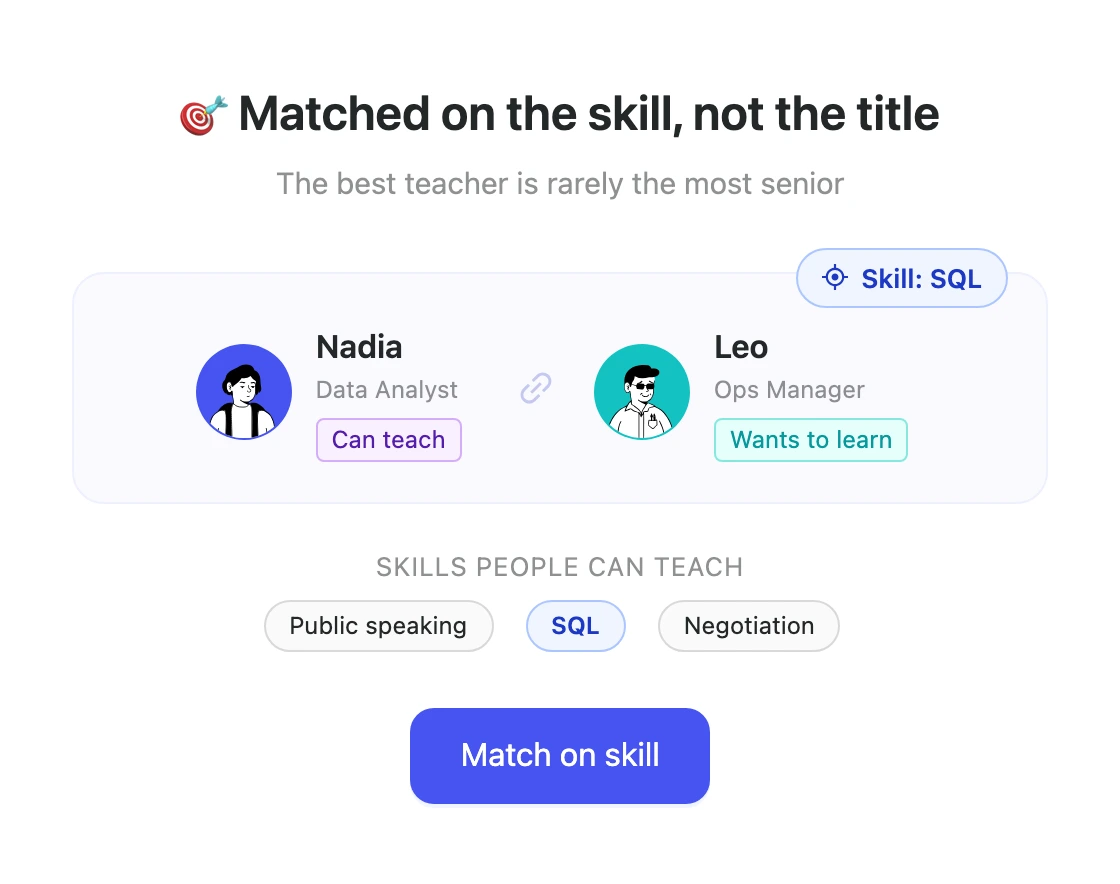
Skill-based pairing matches two people on one specific skill: one masters it, the other wants to build it. Public speaking, SQL, negotiation, project management. Neither the job title nor the seniority decides the match, only what each person can actually pass on.
It's the answer to skill gaps scattered across the organization, without building a training program for every topic. And the best teacher is rarely the most senior person: a junior can perfectly well coach a manager on a tool they know better.
How RandomCoffee closes your skill gaps
Everyone declares what they can teach and what they want to learn. The algorithm does the rest.
Map the skills
Each employee tags the skills they can teach and the ones they want to build, in a few clicks.
Match on the right skill
The algorithm pairs who knows with who wants to learn, regardless of department or level.
Frame the transfer
A skill goal, bookable sessions, resources: the pair knows exactly what they are working on.
Track real application
Feedback and progress: you see the skill move from the pair to the job.
The value for your organization
→ Match on the specific skill, not the title or the seniority.
Explore the other mentoring use cases
Let's talk about your program
Tell us about your context and our experts will show you how to launch your “Skill-based pairing” program with RandomCoffee, and what comparable organizations achieved.
- Answer within 24 hours
- Personalized demo on your use case
- Set up in under 30 minutes, no IT work required
Trusted by teams at